Water Heater Leaking From the Drain Valve? How to Stop It
A water heater leaking from the drain valve is usually one of the cheapest leaks to fix. Most of the time the valve isn't fully closed, or a grain of sediment is stuck under its seal. Sometimes the cheap plastic valve has simply worn out. A $5 hose cap stops the drip today. A new brass drain valve costs $10 to $25 to buy, or $100 to $250 if a plumber fits it. The one case to take seriously is water coming from behind the valve, where it threads into the tank, because that can mean the tank is rusting.
Typical pro cost
$100 to $250
- Urgency
- Within a few days
- DIY difficulty
- Easy to moderate
- Time to fix
- 5 minutes to 2 hours
- Prices
- US typical range
Last reviewed October 2026
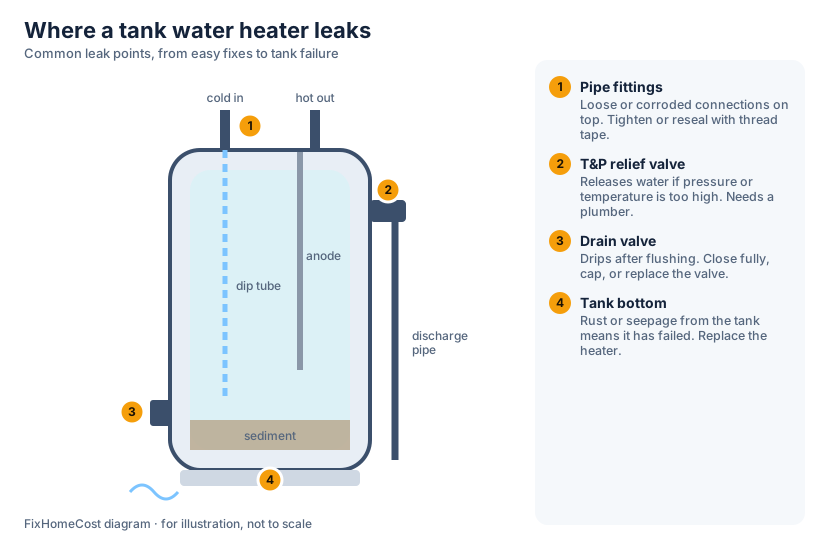
Water heater leaking from the drain valve: first, find exactly where
The drain valve is the faucet-like fitting near the bottom of the tank. It's usually white or black plastic on newer heaters and brass on older or higher-end ones. It's there so the tank can be drained and flushed. Because it sits right where sediment collects, it's also one of the most common places a heater starts to drip.
Dry the valve and the area around it with a paper towel. Then hold a dry towel under it for a few minutes. Where the water shows up tells you almost everything:
- From the spout (the hose outlet): The valve isn't sealing shut. It's either not fully closed, or debris is holding it open. This is the most common case and usually free to fix.
- From around the handle or stem: The valve's internal seal is worn. Tightening sometimes helps, but replacement is the real fix.
- From where the valve screws into the tank: The threads are loose or the seal has failed. Or, more seriously, the tank fitting is corroding. Look for rust around the base.
- From above the valve, running down: The leak isn't the drain valve at all. Water from a fitting on top, or from the relief valve pipe, often runs down the side and drips off the drain valve. See water heater leaking from the top.
Why water heater drain valves leak
Not fully closed
Very common after someone has flushed the tank. Plastic valves need a firm turn to seal, but not a forced one.
Sediment on the seal
A grain of mineral grit lodged under the washer keeps it from closing. It often happens right after a flush, when the sediment gets stirred up.
Worn-out plastic valve
Factory plastic valves get brittle with heat and age. Their washers harden and crack, especially on tanks over 8 to 10 years old.
Loose or cracked threads
Overtightening, a bump from a vacuum or a box, or heat cycling can loosen the valve, or crack its plastic threads.
High pressure
If the relief valve also drips, pressure may be spiking from thermal expansion. That stresses every seal on the tank. See pressure relief valve leaking.
Corroded tank fitting
Rust and water around the base of the valve can mean the steel around the opening is corroding. That's a sign the tank is near the end of its life.
How to fix a leaking drain valve, step by step
Start with the free fixes. Each one takes just a few minutes.
- 1
Turn the valve handle clockwise until it's snug. On plastic valves, firm hand pressure is enough. Don't use pliers on plastic. If the drip stops, you're done.
- 2
If it still drips from the spout, screw a garden hose onto the valve and run the other end to a floor drain or outside. Open the valve fully for 10 to 20 seconds to blast out any grit, then close it again. This clears sediment off the seal more often than you'd expect.
- 3
Still dripping? Screw a brass garden-hose cap, with a rubber washer inside, onto the valve outlet. It costs a few dollars and stops a spout drip completely. It's a perfectly good long-term fix if the valve body itself is sound.
- 4
If water is coming from around the handle, or from where the valve meets the tank, plan to replace the valve. Instructions are below.
- 5
While you're there, look for rust on the tank bottom, and water under the heater that isn't from the valve. Those mean the tank itself is failing.
Tools and materials
- Garden hose and bucket
- Brass hose cap with washer ($3–$6)
- Replacement brass drain valve ($10–$25)
- Thread tape or pipe dope
- Adjustable wrench or channel-lock pliers
Approximate DIY cost: $0 to $30
Call a pro when
- The leak is where the valve threads into the tank
- There's rust around the valve or on the tank bottom
- The plastic valve snapped or the threads cracked
- It's a gas heater and you don't want to relight the pilot
- The tank is over 10 to 12 years old
How to replace a water heater drain valve
Most plumbers recommend swapping the plastic factory valve for a full-port brass ball valve. It seals better, lasts longer, and drains sediment much faster when you flush. Replacing it means draining the tank.
- 1
Turn off the power at the breaker (electric), or set the gas control to "Pilot" or "Vacation" (gas). Close the cold-water supply valve on top of the tank.
- 2
Let the water cool for a few hours. Attach a hose to the old drain valve, open a hot tap upstairs, and drain the tank completely.
- 3
Unscrew the old valve counterclockwise. Plastic ones sometimes snap. If that happens, the threaded piece left in the tank can usually be backed out with pliers or a pipe extractor.
- 4
Wrap the new valve's threads with thread tape, about three wraps clockwise, and screw it in snugly so the outlet points down or toward the drain.
- 5
Close the new valve. Open the cold supply and leave a hot tap running until water flows steadily, which means the tank is full.
- 6
Only then restore power, or set the gas back to "On." Check the new valve for drips after the first heating cycle.
Cost to fix a water heater leaking from the drain valve
| Job | Typical cost |
|---|---|
| Tighten or flush the valve (DIY) | $0 |
| Brass hose cap (DIY) | $3–$6 |
| New brass drain valve (part only) | $10–$25 |
| Drain valve replaced by a plumber | $100–$250 |
| Valve replacement plus a full flush | $200–$350 |
| Plumber service call | $100–$200 |
| New tank water heater, installed | $882–$1,826 |
Ranges are typical US prices compiled by FixHomeCost from published cost guides. Combining the valve swap with a flush and an anode rod check is usually the best value for a plumber's visit. If the tank is old or rusting, compare the cost against a new water heater.
Common questions
Why is my water heater leaking from the drain valve?
Usually the valve isn't fully closed, or sediment is stuck under its seal. Older plastic valves also wear out. Leaks where the valve meets the tank can mean loose threads or a corroding tank.
Is a leaking drain valve an emergency?
A slow drip from the spout isn't an emergency. Put a hose cap or bucket under it and fix it within a few days. Water from the base of the valve, or rust on the tank, needs a closer look sooner.
Can I just put a cap on a leaking water heater drain valve?
Yes, if the drip comes out of the spout. A brass garden-hose cap with a rubber washer stops it. It won't help if water is leaking around the handle or where the valve threads into the tank.
How much does it cost to replace a water heater drain valve?
The part costs about $10 to $25. A plumber typically charges $100 to $250, or $200 to $350 if they also flush the tank.
Do I have to drain the water heater to replace the drain valve?
Yes. The valve sits below the water line, so the tank has to be drained first. Turn off the power or gas and the cold supply, let the water cool, then drain it.
Why does my drain valve leak after flushing the water heater?
Flushing stirs up sediment, and a grain can get trapped under the valve seal. Open the valve briefly with a hose attached to flush it out, then close it firmly. A hose cap stops any remaining drip.
Related guides
This is general information, not a professional inspection. Gas and electrical work can be dangerous; hire a licensed professional when in doubt. See how we research costs.