Water Heater Leaking From the Top? 6 Common Spots & How to Fix Each
A water heater leaking from the top is usually good news, compared with a leak at the bottom. Most top leaks come from fittings you can fix: a loose or corroded water connection, a dripping relief valve, or the anode rod port. A plumber can usually fix them for $100 to $350. The exception is rust coming through the top of the tank itself. That means the tank is failing and needs replacing.
Typical pro cost
$100 to $350
- Urgency
- Within a few days
- DIY difficulty
- Easy to moderate
- Time to fix
- 15 minutes to 2 hours
- Prices
- US typical range
Last reviewed October 2026
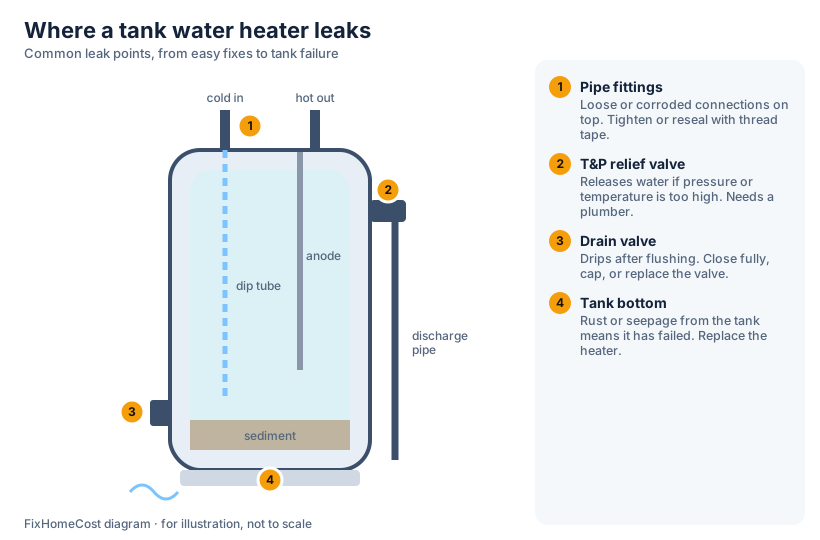
Why a water heater leaking from the top is usually fixable
The top of a tank water heater is where all the connections are. Cold water comes in through one pipe and hot water leaves through another. The relief valve, the anode rod and, on gas models, the exhaust flue all sit up there too. Every one of those joints is threaded, and every heating cycle makes the metal expand and contract a little. Over years, fittings loosen and corrode.
The steel tank itself is wrapped in insulation and a metal jacket, so a true tank leak usually shows up at the bottom first. That's why a leak at the top is so often a fitting, not the tank.
The trick is finding exactly which fitting. Water runs along pipes and down the jacket, so the wet spot is often an inch or two away from the real source.
- 1
Dry the entire top of the heater, all the pipes and fittings, and the top of the jacket with a towel.
- 2
Wrap a dry paper towel around each connection, one at a time: cold inlet, hot outlet, relief valve, and the anode rod port (often a hex head on top, sometimes under a plastic cap).
- 3
Wait 10 to 15 minutes, or run some hot water to make the heater cycle. Then check which towel is wet. That's your leak.
- 4
Look up too. Water dripping onto the heater from a pipe or a fitting above it is common, and it's not the heater's fault at all.
6 places a water heater leaks from the top
1. Cold inlet or hot outlet connection
The most common spot. Threads loosen, or the flexible connector hoses wear out. A quarter-turn with a wrench sometimes fixes it. Corroded connectors need replacing.
2. Corroded dielectric nipples
The short threaded fittings screwed into the tank top can rust from the inside, especially where copper meets steel. Look for white or green crust and rust.
3. Temperature and pressure relief valve
Water at the valve's threads, or dripping from its discharge pipe, is a separate problem. See pressure relief valve leaking.
4. Anode rod port
The anode rod screws into the top of the tank. If its threads were never sealed well, or it was recently replaced, it can seep.
5. Condensation (gas heaters)
On a cold-water refill, moisture in the exhaust can condense and drip from the flue, sometimes with a sizzle on the burner. It stops once the tank warms up.
6. Rusted tank top
Rust and water coming from under the jacket, or around the base of the fittings where the tank itself is corroded, means the tank is failing. It can't be repaired.
How to fix a water heater leaking from the top
- 1
Loose connection: With the water still on, hold the fitting below with one wrench and gently tighten the nut above with another, about a quarter turn. Check again in 15 minutes. Don't overtighten. You can crack a fitting or strip threads.
- 2
Worn flex connector: Turn off the cold supply and the heater, open a hot tap to drop the pressure, and replace the connector with a new braided stainless one of the same length. This is a $15 to $30 part.
- 3
Corroded nipple: This means draining part of the tank and unscrewing fittings from the tank top, which can be stubborn. It's usually a plumber job, though experienced DIYers manage it.
- 4
Anode port seep: Drain a few gallons, remove the rod, re-wrap the threads with thread tape or pipe dope, and reinstall it snug. If the rod is badly eaten away, replace it while it's out.
- 5
Condensation on a gas heater: If it only happens for the first few minutes after a large hot-water draw and then stops, it's normal. If it's constant, have the venting and burner checked.
- 6
Rusty tank: Start planning a replacement. Keep a pan and towels under it, and check daily. Tanks that rust at the top often fail at the bottom soon after.
Tools and materials
- Two adjustable or pipe wrenches
- Paper towels and a flashlight
- Thread tape or pipe dope
- Braided flex connectors ($15–$30 each)
- Bucket and hose for partial draining
Approximate DIY cost: $0 to $60
Call a pro when
- Fittings are corroded solid or won't turn
- The leak is at the tank's own threads or the jacket
- There's rust coming through the top of the tank
- It's a gas heater and you're unsure about the vent or relighting
- Water has reached nearby wiring or the floor below
Cost to fix a water heater leaking from the top
| Job | Typical cost |
|---|---|
| Tighten a loose connection (DIY) | $0 |
| Replace flex connectors (plumber) | $100–$250 |
| Replace dielectric nipples (plumber) | $150–$350 |
| Reseal or replace anode rod | $100–$300 |
| T&P valve replaced | $150–$300 |
| Plumber service call | $100–$200 |
| New tank water heater, installed | $882–$1,826 |
Ranges are typical US prices compiled by FixHomeCost from published cost guides. If the heater is older and the plumber is already there, ask about replacing both connectors and nipples at once, so you're not calling them back for the other side next year.
Repair or replace the water heater?
Fitting leaks are worth fixing on almost any heater that's otherwise healthy. Replacement makes more sense when:
- The tank is rusting at the top or bottom, or the water is rusty
- It's more than 10 to 12 years old and you're already paying for a visit
- It also pops or rumbles loudly, or no longer keeps up with demand
See our water heater replacement cost guide, and our main water heater leaking guide for leaks at the bottom or sides.
Common questions
Why is my water heater leaking from the top?
Usually a loose or corroded cold or hot water connection, a dripping relief valve, or a seeping anode rod port. Condensation on gas heaters and rust in the tank itself are less common causes.
Is a water heater leaking from the top an emergency?
Usually not. Most top leaks are slow drips from fittings. If water is spraying, turn off the cold supply and the heater, and call a plumber. If it's a slow drip, put down a pan and fix it within a few days.
How much does it cost to fix a water heater leaking from the top?
Most repairs cost $100 to $350, such as replacing connectors, nipples or the relief valve. If the tank itself is rusted through, a new tank heater costs about $882 to $1,826 installed.
Can I tighten the pipes on top of my water heater?
Yes, gently. Hold the lower fitting with one wrench, and turn the nut above it about a quarter turn with another. Overtightening can crack fittings, so stop once the drip stops.
Does a leak at the top mean my water heater is failing?
Not usually. Most top leaks are fittings. Rust coming from the tank itself, or water from under the jacket, does mean the tank is failing and should be replaced soon.
Why is my gas water heater dripping from the top after a shower?
After a big hot-water draw, cold water refills the tank and moisture in the exhaust can condense and drip. It should stop within minutes as the tank heats. If it doesn't, have the vent checked.
Related guides
This is general information, not a professional inspection. Gas and electrical work can be dangerous; hire a licensed professional when in doubt. See how we research costs.