Water Heater Pressure Relief Valve Leaking? Causes, Fixes & Cost
A water heater pressure relief valve leaking means one of two things. Either the valve is doing its job because pressure or temperature in the tank is too high, or the valve itself is worn out. The most common cause is thermal expansion in a "closed" plumbing system with no expansion tank. A $10 pressure gauge tells you which it is. Replacing the valve costs about $150 to $300, and adding an expansion tank $100 to $400. Never plug or cap the valve.
Typical pro cost
$150 to $400
- Urgency
- Within a few days
- DIY difficulty
- Easy to test
- Time to fix
- 30 minutes to 2 hours
- Prices
- US typical range
Last reviewed October 2026
What the pressure relief valve does
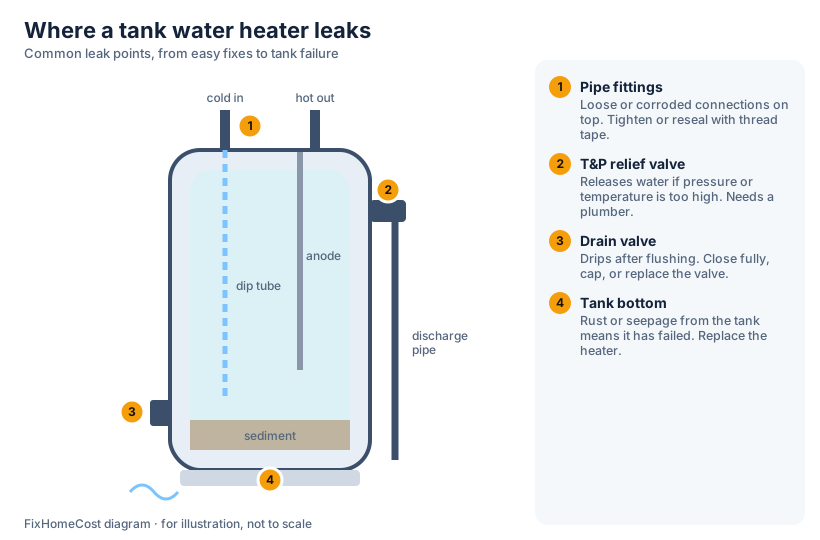
Every tank water heater has a temperature and pressure relief valve, usually called the T&P valve. It's the brass valve on the top or upper side of the tank, with a pipe running down toward the floor. It's the most important safety part on the heater.
The valve is designed to open at about 150 psi, or when the water reaches about 210°F. Either one means something has gone wrong, and the valve dumps water to bring pressure and temperature back down before the tank can fail. A tank with a blocked relief valve and a stuck thermostat can rupture with tremendous force. That's why the valve exists, and why you should never plug it.
So when you see water dripping from the end of that discharge pipe, the question isn't "how do I stop the drip?" It's "why is the valve opening?"
Water heater pressure relief valve leaking: the common causes
Thermal expansion (most common)
Water expands as it heats. In a "closed" system, where a check valve, backflow preventer or pressure-reducing valve stops water from flowing back to the street, that extra volume has nowhere to go. Pressure spikes during every heating cycle, and the valve drips.
High incoming water pressure
City pressure above about 80 psi strains the whole house and pushes the tank closer to the valve's limit. A failed or missing pressure-reducing valve is often the cause.
Failed expansion tank
An expansion tank absorbs that extra water. When its internal bladder fails, it fills with water and stops working. Tap it: a tank that sounds solid all the way up is waterlogged.
Worn-out valve
Mineral deposits and corrosion keep the valve seat from sealing. That's especially likely if it's never been tested, or was just tested after years and now won't close fully.
Water too hot
A faulty thermostat or gas valve can overheat the water. If the hot water is scalding or steaming, turn the heater off and call a pro.
Debris after testing
Lifting the test lever can dislodge a bit of scale that keeps the valve slightly open. Sometimes a second flush clears it. Often it means replacing the valve.
How to find out why it's leaking
A water pressure gauge that screws onto a hose bib or the water heater drain costs about $10 to $15 at any hardware store. It's the single most useful tool for this problem.
- 1
Screw the gauge onto an outdoor hose bib or a laundry faucet, and open the faucet. Make sure nobody is using water. Read the pressure.
- 2
If it's above 80 psi, your incoming pressure is too high. That alone can explain the leak, and it's hard on every fixture in the house.
- 3
Get the gauge with a "lazy" or "tell-tale" needle if you can. It records the highest reading. Leave it on overnight, or through a long shower and the heater's recovery cycle.
- 4
If the pressure is normal in the morning but the maximum needle shows a spike, often to 120 to 150 psi, thermal expansion is the cause. You need an expansion tank, or your existing one has failed.
- 5
If the pressure stays steady and normal, and the water isn't overly hot, the valve itself is the problem. Replace it.
- 6
Feel the hot water at a tap. If it's much hotter than the thermostat setting, or steaming, turn the heater off and call a plumber. Overheating is the dangerous version of this problem.
How to fix it
If it's thermal expansion
Install a thermal expansion tank on the cold-water line near the heater, with its air charge set to match your house pressure. If you already have one and it's waterlogged, replace it.
If incoming pressure is high
Install or replace a pressure-reducing valve (PRV) where the main water line enters the house. Most homes do well at 50 to 70 psi.
If the valve is worn
Replace the T&P valve with one of the same pressure and temperature rating. It's a short job, but it means draining some water and working with a pipe wrench.
If the water is too hot
Turn the thermostat down to about 120°F. If the water stays too hot, the thermostat or gas valve has failed and needs replacing by a pro.
Tools and materials
- Water pressure gauge with max needle ($10–$15)
- Bucket and towels
- Pipe wrench and thread tape (if replacing)
- New T&P valve with the same rating ($20–$40)
Approximate DIY cost: $10 to $60
Call a pro when
- The water is scalding or the valve is gushing
- Pressure spikes and you need an expansion tank or PRV
- The valve won't unscrew or the tank threads look corroded
- The heater is gas and you're unsure about relighting it
- The tank is over 10 years old and showing rust
Cost to fix a leaking water heater pressure relief valve
| Job | Typical cost |
|---|---|
| Water pressure gauge (DIY test) | $10–$15 |
| T&P valve (part only) | $20–$40 |
| T&P valve replaced by a plumber | $150–$300 |
| Thermal expansion tank, installed | $100–$400 |
| Pressure-reducing valve (PRV) replaced | $300–$600 |
| Water heater thermostat replaced | $150–$200 |
| New tank water heater, installed | $882–$1,826 |
Ranges are typical US prices compiled by FixHomeCost from published cost guides. Many local codes now require an expansion tank on closed systems. If your plumber recommends one when replacing the valve, that's usually why.
Common questions
Why is my water heater pressure relief valve leaking?
Usually because pressure spikes from thermal expansion in a closed plumbing system, or because incoming water pressure is too high. Less often, the water is overheating or the valve itself is worn and won't seal.
Is a leaking pressure relief valve dangerous?
An occasional drip isn't an emergency, but it's a warning. Continuous discharge, or very hot water, means turn the heater off and call a plumber. Never plug or cap the valve.
How much does it cost to replace a water heater pressure relief valve?
The valve costs about $20 to $40. A plumber typically charges $150 to $300 installed. If the real cause is thermal expansion, add $100 to $400 for an expansion tank.
Do I need an expansion tank on my water heater?
If your home has a check valve, backflow preventer or pressure-reducing valve on the main line, yes. That makes it a closed system, and many local codes require an expansion tank.
Why does my relief valve leak only at night?
At night nobody is using water, so the expansion from the heater's recovery cycle and slightly higher street pressure have nowhere to go. That pattern strongly suggests thermal expansion.
Can I just replace the pressure relief valve?
If pressure and temperature test normal, yes. If pressure is spiking, a new valve will soon start dripping too, because it's doing its job. Fix the pressure problem as well.
Related guides
This is general information, not a professional inspection. Gas and electrical work can be dangerous; hire a licensed professional when in doubt. See how we research costs.