AC Compressor Not Turning On? How to Tell, Why It Happens & Repair Costs
With an AC compressor not turning on, the outdoor fan may still spin and air still blows inside, but nothing gets cold. Most of the time the compressor itself is fine. The fault is a part that starts it: a weak capacitor ($120 to $400), a bad contactor ($150 to $400), or a safety switch that's tripped. A compressor that's actually failed costs $800 to $2,500 or more to replace. On an older system, that's often the point to replace the whole unit.
Typical pro cost
$120 to $400
- Urgency
- Turn off and book a tech
- DIY difficulty
- Checks only
- Time to fix
- 1 to 4 hours (pro)
- Prices
- US typical range
Last reviewed October 2026
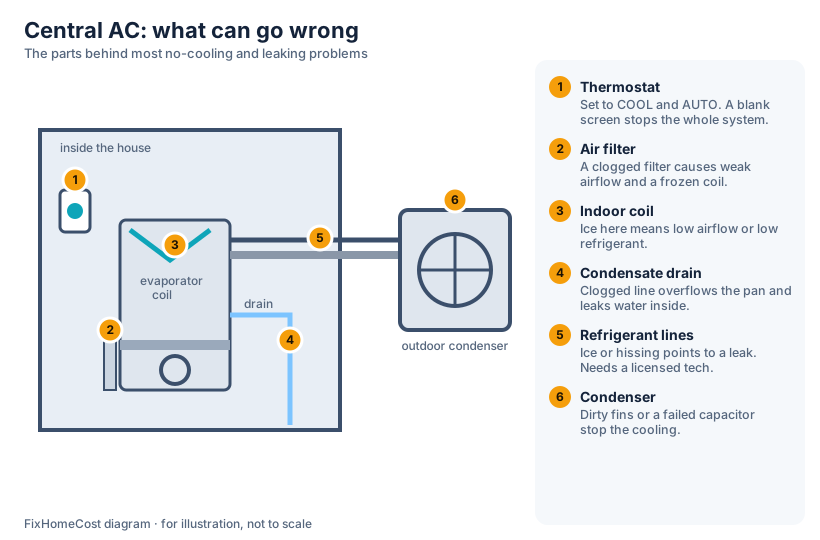
AC compressor not turning on? How to tell for sure
The compressor is the heart of the system. It's the heavy, rounded black or gray tank inside the outdoor unit that pumps refrigerant around. The fan on top is a separate motor, and that causes a lot of confusion: the fan can spin perfectly while the compressor does nothing.
Here's how to tell without opening anything, with the AC set to cool:
- Listen. A running compressor makes a steady, low hum or drone you can feel in the unit. With only the fan running, you hear a whoosh of air and little else.
- Feel the air coming out of the top. When the compressor runs, the air blowing up from the outdoor unit is noticeably warm, because it's dumping the heat from your house. Cool or outdoor-temperature air means the compressor isn't working.
- Touch the larger copper line. Two copper lines run from the outdoor unit to the house. The larger one, usually insulated, should feel cold and often sweaty within 10 minutes. If it's warm, the compressor isn't pumping.
- Watch for hum-then-click. A loud hum for a few seconds, then a click and silence, means the compressor is trying to start and failing.
Why an AC compressor won't turn on
Weak or failed capacitor
The most common cause by far. The capacitor gives the compressor a starting kick. Many outdoor units use one dual capacitor for both the fan and compressor, and one side can fail while the other works. That's why the fan spins and the compressor doesn't.
Bad contactor
The contactor switches power to the compressor. Pitted, burnt or insect-jammed contacts can deliver too little power, or none at all.
Thermal overload tripped
If the compressor overheated, its internal protector shuts it off and can take 30 minutes to a couple of hours to cool and reset. That's common on very hot days with a dirty outdoor coil.
Hard-starting compressor
As compressors age, they need more effort to start. A hard-start kit adds an extra boost and can keep an older compressor going for years.
Low refrigerant or pressure switch
Many systems have pressure switches that stop the compressor if refrigerant is too low or pressure is too high. A leak is the usual reason.
Wiring or power problem
A loose wire, a burnt terminal, or one blown fuse in the outdoor disconnect can stop the compressor while the fan still runs.
Failed compressor
Burnt windings, a short to ground, or a seized motor mean the compressor is done. A technician confirms it with resistance and insulation tests before condemning it.
Dirty outdoor coil
A clogged coil makes the compressor run hot and trip its overload repeatedly. It's cheap to fix, and expensive to ignore.
What you can safely check
- 1
Confirm the thermostat is set to "Cool" and well below room temperature, and replace the air filter if it's dirty.
- 2
Check the AC breaker in the main panel and the disconnect box next to the outdoor unit. If the breaker had tripped, reset it once only.
- 3
Turn the system off and look at the outdoor coil fins. If they're matted with dirt or cottonwood, gently rinse them with a garden hose, with the power off.
- 4
If it's a hot afternoon and the compressor may have overheated, leave the system off for an hour or two, then try again. If it starts and runs, the coil or airflow is likely the problem behind the overheating.
- 5
Look at the top of the capacitor through the unit's service opening, if it's visible without removing panels. A domed or leaking top is a strong clue. Take a photo, and don't touch it.
- 6
If none of that helps, book a technician and tell them exactly what you observed: fan running or not, hum or silence, warm or cold suction line.
Tools and materials
- New air filter
- Garden hose with a gentle spray nozzle
- Flashlight and phone camera
Approximate DIY cost: $5 to $40
Call a pro when
- The compressor hums but won't start
- The fan runs but the big copper line stays warm
- The breaker trips when the compressor tries to start
- You see a bulging capacitor or burnt wiring
- The system is low on refrigerant or freezing up
Cost to fix an AC compressor that won't turn on
| Job | Typical cost |
|---|---|
| AC service call or diagnostic | $75–$200 |
| Run or dual capacitor, installed | $120–$400 |
| Contactor replacement | $150–$400 |
| Hard-start kit, installed | $150–$400 |
| Outdoor coil cleaning | $100–$400 |
| Refrigerant leak repair and recharge | $200–$1,600 |
| Compressor replacement (labor only, under warranty) | $600–$1,200 |
| Compressor replacement (out of warranty) | $800–$2,500+ |
Ranges are typical US prices compiled by FixHomeCost from published cost guides. Compressor prices rise with system size, and with older refrigerants that are getting scarce and expensive. Most compressors carry a 10-year parts warranty if the system was registered, so check before you pay.
Replace the compressor or the whole AC?
If the problem is a capacitor, contactor or hard-start kit, repair it. Those are inexpensive, and the compressor will keep going. A truly failed compressor is different. Here's how to think about it:
- System under about 8 years old, still under warranty: Replace the compressor. You'll mostly pay labor.
- System 10 to 15 years old, out of warranty: Get quotes for both. A new compressor in an old system leaves you with an old coil, old fan motor and older refrigerant.
- System 15+ years old, or using R-22 refrigerant: Replace the system. R-22 hasn't been produced in the US since 2020, so recharging it is very expensive.
Compare the numbers with our AC replacement cost estimator and repair or replace calculator.
Common questions
Why is my AC compressor not turning on but the fan is running?
Usually the compressor side of a dual capacitor has failed while the fan side still works. Other causes are a bad contactor, a tripped thermal overload, low refrigerant, or a failed compressor.
How do I know if my AC compressor is bad?
Signs include humming without starting, a breaker that trips at startup, and warm air from the vents with a warm suction line. A technician confirms it by testing the windings and checking for a short to ground.
How much does it cost to fix an AC compressor that won't turn on?
Most fixes, like a capacitor, contactor or hard-start kit, cost $120 to $400. Replacing a failed compressor costs about $800 to $2,500 or more, or $600 to $1,200 in labor if the part is under warranty.
Can an AC compressor reset itself?
Yes. Most have an internal thermal overload that shuts them off when they overheat and resets once they cool down, which can take up to a couple of hours. If it keeps happening, find out why it's overheating.
Is it worth replacing an AC compressor?
On a newer system under warranty, usually yes. On a system over about 12 to 15 years old, or one that uses R-22, a new system is usually the better value.
Can low refrigerant stop the compressor from turning on?
Yes. Many systems have a low-pressure switch that blocks the compressor when refrigerant is low, to protect it. The leak needs to be found and repaired before recharging.
Related guides
This is general information, not a professional inspection. Electrical and refrigerant work requires a licensed technician. See how we research costs.