Outside AC Unit Not Running but Inside Is? 9 Causes & Fixes
When the indoor fan blows but the outdoor AC unit sits silent, the outdoor unit isn't getting power or isn't getting the signal to start. Start with the free checks: the breaker, the disconnect box outside, the thermostat setting, and a full drain pan that may have tripped a safety switch. If those are fine, the usual culprits are a failed capacitor or contactor, which typically cost $120 to $400 to replace.
Typical pro cost
$120 to $400
- Urgency
- Same day in hot weather
- DIY difficulty
- Easy checks first
- Time to fix
- 15 minutes to 2 hours
- Prices
- US typical range
Last reviewed October 2026
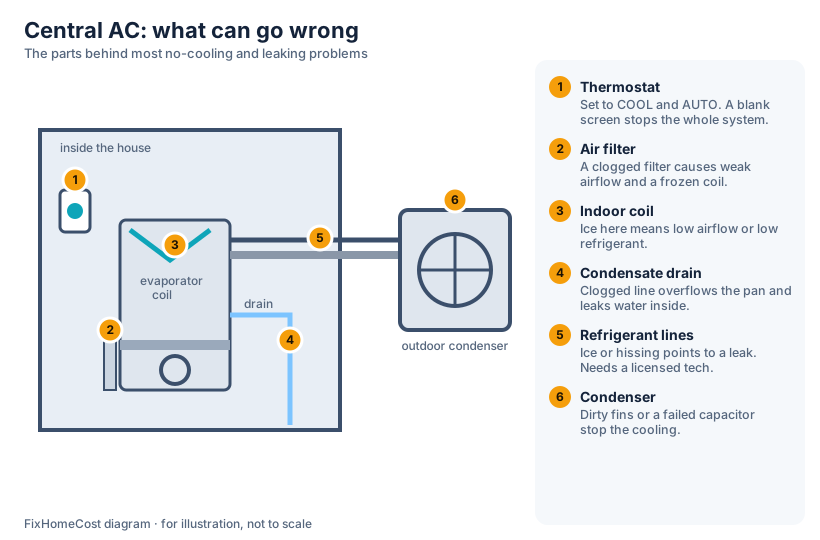
How the indoor and outdoor units talk to each other
A central air conditioner is really two machines. The indoor unit, your furnace or air handler, has the blower that pushes air through the house. The outdoor unit holds the compressor and a big fan, and does the actual cooling.
When the thermostat calls for cooling, it sends a low-voltage, 24-volt signal two ways at once: one to the indoor blower, and one through a thin wire to the outdoor unit. That signal energizes a switch called the contactor, which lets full 240-volt power flow to the compressor and fan.
So when the inside runs and the outside doesn't, the break is somewhere along that path. Either the outdoor unit has no high-voltage power, the low-voltage signal isn't reaching it, or the parts that start it have failed. Working down that list in order saves a lot of guessing.
Start with the free checks
- 1
Check the thermostat. It should be set to "Cool," with the set temperature at least 3 degrees below room temperature. If it has batteries and a dim or blank screen, replace them.
- 2
Check the breaker. At the main panel, find the AC or condenser breaker, usually a double breaker. If it's tripped, reset it once. If it trips again, stop and see AC breaker keeps tripping.
- 3
Check the outdoor disconnect. It's the gray box on the wall near the unit. Make sure the switch is on, or the pull-out block is fully seated the right way round. Lawn crews and kids sometimes pull these.
- 4
Check for a tripped float switch. Many systems have a safety switch on the indoor drain pan or drain line that cuts the outdoor unit when water backs up. A full pan or a clogged drain is the clue. Clear the drain and the outdoor unit usually starts again.
- 5
Wait it out once. Some thermostats and outdoor units have a 3 to 5 minute delay after a power cut or setting change. An overheated compressor can also stay off for 30 to 60 minutes while it cools down on its internal protector.
- 6
Look for damage. With the power off, check the unit and the thin wire running to it for chewed insulation, a loose connection, or a cut wire from mowing or trimming.
Tools and materials
- Fresh thermostat batteries
- Flashlight
- Wet/dry vac for a clogged drain
- Phone to photograph anything that looks damaged
Approximate DIY cost: $0 to $10
Call a pro when
- Power is on, but the unit is silent or just hums
- The breaker trips again after one reset
- You see a swollen capacitor or burnt wiring
- The thin thermostat wire outside is damaged
- The compressor clicks on and off repeatedly
9 reasons the outside unit won't run
1. Tripped breaker
The most common no-cost fix, as long as it stays on after a reset.
2. Disconnect switched off or blown fuses
Some disconnects hold fuses that blow just like a breaker trips. A technician can test and replace them.
3. Thermostat setting or batteries
Set to "Fan On" instead of "Cool," dead batteries, or a setback schedule can all run the blower without the AC.
4. Float or safety switch tripped
A clogged condensate drain shuts the outdoor unit off to prevent a flood. Clear the drain and it usually resets.
5. Failed capacitor
The number one repair. Without its starting boost, the compressor and fan can't start. The unit may hum, or do nothing at all.
6. Failed contactor
If the contactor's coil burns out or its contacts are pitted or blocked by insects, power never reaches the compressor and fan.
7. Broken thermostat wire
The thin wire to the outdoor unit gets chewed by rodents, cut by trimmers, or corroded. No signal means no start.
8. Blown low-voltage fuse
Many furnace control boards have a small 3 to 5 amp fuse for the thermostat circuit. A short in the outdoor wiring blows it. A tech can find the short and replace the fuse.
9. Pressure switch lockout or failed compressor
Low refrigerant or a very dirty coil can trip a pressure switch. A compressor that's burned out won't start at all. Both need a technician.
What you hear at the outdoor unit is a clue
- Total silence: No power, no signal, or a dead contactor. Check the breaker, disconnect and float switch first.
- A single click, then nothing: The contactor pulled in, but the compressor and fan didn't start. Often a capacitor, or a compressor on its thermal cutout.
- A hum or buzz with the fan still: Classic failed capacitor. Turn it off now. See AC making buzzing noise.
- Fan runs, but blows cool air, not warm: The compressor isn't running. Capacitor, compressor or a refrigerant problem.
- Starts, runs a few minutes, then stops: Overheating or a safety switch. A dirty coil, low refrigerant or a failing fan motor.
Cost to fix an outside AC unit that won't run
| Job | Typical cost |
|---|---|
| AC service call or diagnostic | $75–$200 |
| Clear a clogged condensate drain (pro) | $75–$250 |
| Replace disconnect fuses | $75–$200 |
| Run or start capacitor, installed | $120–$400 |
| Contactor replacement | $150–$400 |
| Repair or replace thermostat wire to the outdoor unit | $150–$400 |
| Replace the outdoor disconnect box | $120–$450 |
| Condenser fan motor replacement | $300–$700 |
| Compressor replacement | $800–$2,500+ |
Ranges are typical US prices compiled by FixHomeCost from published cost guides. Same-day calls in a heat wave often cost more. If you can, book the first appointment of the morning before the backlog builds.
Common questions
Why is my inside AC running but not the outside unit?
The outdoor unit isn't getting power or the start signal. Check the breaker, the outdoor disconnect, the thermostat setting and the condensate float switch. If those are fine, a failed capacitor or contactor is most likely.
Can a clogged drain stop my outside AC unit?
Yes. Many systems have a float switch that turns off the outdoor unit when the condensate drain backs up, to prevent water damage. Clearing the drain usually lets it start again.
How do I reset my outside AC unit?
Turn the thermostat off, switch the AC breaker off and on, check the outdoor disconnect, and wait 5 minutes before turning cooling back on. Most units don't have a reset button. If it still won't start, call a technician.
How much does it cost to fix an outdoor AC unit that won't turn on?
Most repairs, like a capacitor or contactor, cost $120 to $400 including the service call. A fan motor runs $300 to $700, and a compressor $800 to $2,500 or more.
Is it bad to run the indoor fan without the outside unit?
It won't damage anything, but it won't cool. If the outdoor unit is humming without starting, though, turn the system off. That can overheat the compressor.
Why does my outside AC unit turn on and then shut off?
Usually overheating or a safety switch. Common causes are a dirty outdoor coil, low refrigerant, a weak capacitor or a failing fan motor. Have it checked before the compressor is damaged.
Related guides
This is general information, not a professional inspection. Electrical work can be dangerous; hire a licensed professional. See how we research costs.